

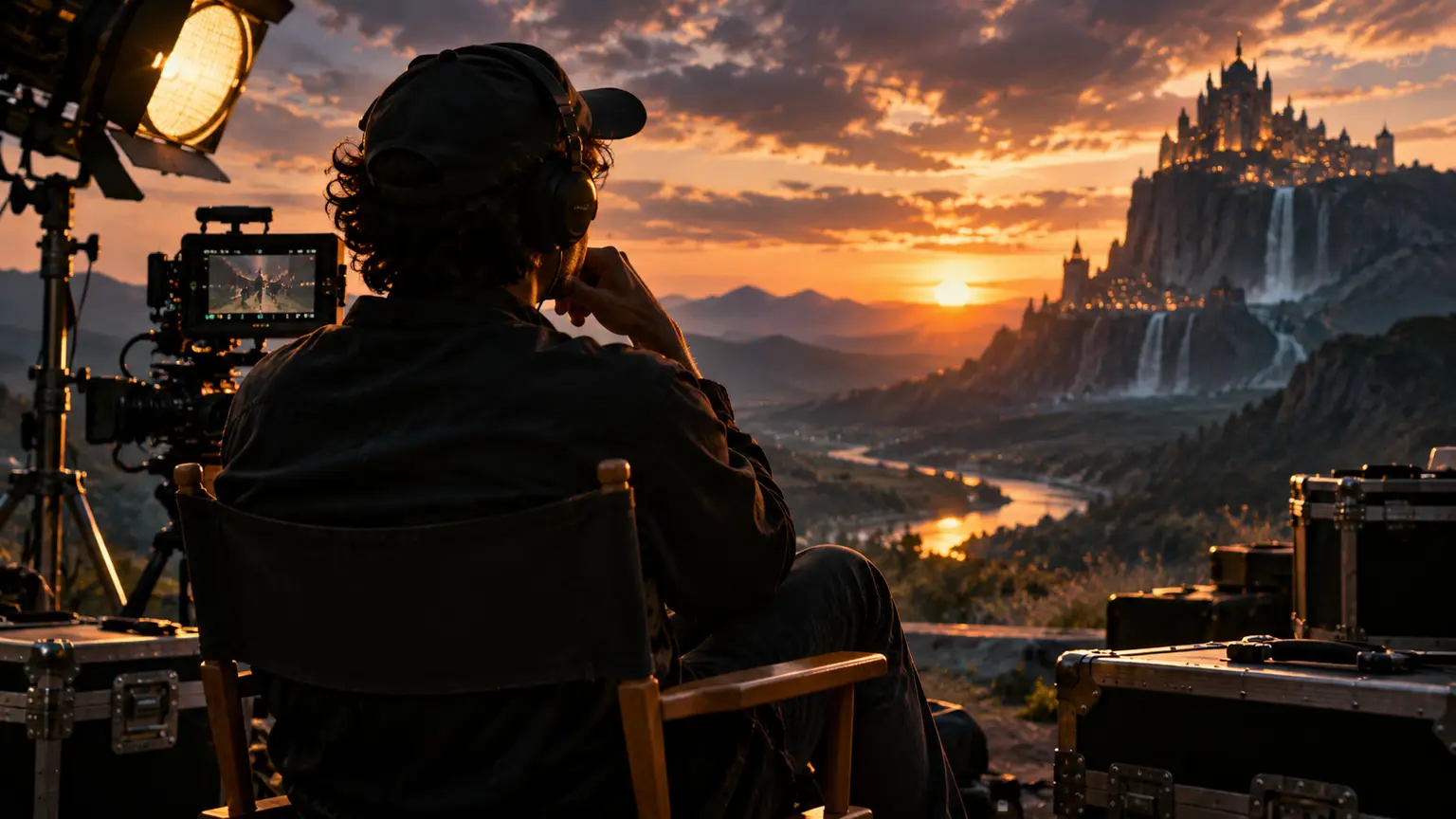
A film can now begin with a sentence, a sketch, a reference frame, or an impossible location. But generation is not cinema by itself. An AI video platform earns its place when it gives those moving images a context: a screen, a standard, an audience, and a reason to be seen.
The distinction matters. General-purpose creation tools are built to produce more content, faster. Cinema asks a different question: what deserves a viewer's attention? AI filmmaking is expanding rapidly, but it needs spaces that recognize the gap between an output and a work. The next chapter is not only about better models. It is about better cultural containers for the films made with them.
https://aicineo.com/create-ai-video
An AI Video Platform Is Not Just a Tool
Most people hear “AI video platform” and picture a software dashboard. Prompts. Timelines. Generated clips. Export buttons. That is one version of the category, and it has real value for creators who need to test ideas, build previs, animate a concept, or solve a production problem that once required a larger budget.
But a platform can also be a destination. It can organize discovery, establish editorial taste, and let creators present work as films rather than demonstrations of a model. This version is less concerned with reducing every production to a feature list. It is concerned with what happens after creation: how a piece is framed, encountered, remembered, and discussed.
That is the opening for AI cinema. A short generated sequence may be technically striking, yet still disappear in an endless feed of experiments. A film has shape. It has intention across time. It has choices about rhythm, sound, performance, framing, and absence. The platform that understands this difference can help a new medium become legible to a real audience.
The Medium Is Bigger Than Text-to-Video
Text-to-video attracts attention because it makes the transformation visible. A written description becomes motion. Yet AI's role in filmmaking is already much wider. It can participate in visual development, concept art, storyboarding, character exploration, animation, environment design, voice work, compositing, translation, sound ideation, and post-production.
For some directors, AI is a rapid sketchbook. For others, it is a visual effects department compressed into an independent studio. For animators, it may become a new way to move through style, timing, and transformation. For experimental artists, the instability of the image may be the point. Every use produces a different relationship between author, machine, and material.
This is why an AI video platform should resist the urge to treat all generated video as one genre. A surreal music film, an episodic science-fiction project, a fashion short, and a personal animated essay do not belong in the same editorial frame merely because each used a model. Their tools may overlap. Their artistic ambitions do not.
The most useful category is not “AI content.” It is AI cinema: motion-picture work in which artificial intelligence participates meaningfully in the process, while cinematic authorship remains visible in the result.
Curation Creates the Signal
When production becomes more accessible, selection becomes more valuable. Anyone can generate dozens of clips in an afternoon. Few can turn fragments into a sequence that carries feeling, consequence, and point of view.
Curation is not a gate closed against newcomers. Done well, it is a signal for both creators and viewers. It gives emerging work a setting beyond the algorithmic scroll. It shows audiences that AI-made film can be funny, intimate, unsettling, political, lyrical, or formally precise. It also raises the expectations for everyone involved.
A serious platform should make room for work that is rough at the edges when that roughness serves the idea. It should also distinguish deliberate experimentation from work that simply stopped at the first impressive image. Technical polish matters, but it is not the only measure. A film can be visually imperfect and still possess an unmistakable voice.
This is where programming becomes part of the medium. The order of a collection, the themes placed in conversation, and the attention given to underrepresented visual languages all shape public understanding. AICINEO approaches this territory as AI cinema, not as a side category for software spectacle. That framing gives creators a more ambitious target than virality.
Authorship Does Not Disappear
The recurring argument around AI film is simple: if a system generates the image, who made it? The question is legitimate, but the answer is rarely simple.
Authorship in cinema has never been a single-person act. Directors work with performers, editors, cinematographers, production designers, composers, crews, tools, and contingencies. AI adds a new collaborator with unusual power and unusual opacity. It can surprise the filmmaker, resist a request, reproduce familiar visual conventions, or introduce artifacts that alter the final meaning.
That does not make the creator irrelevant. It makes their judgment more visible. The authored act may live in the concept, the selection of references, the construction of a workflow, the direction of iterations, the edit, the sound design, or the decision to reject an attractive image because it does not belong in the film.
There are ethical boundaries that cannot be brushed aside. Platforms and creators need clear policies around consent, likeness, training data, imitation, disclosure, and ownership. A compelling image does not excuse the extraction of another artist's identity or the misuse of a performer's face. Cultural confidence includes the ability to set limits.
The goal is not to pretend that AI production has no complications. The goal is to build a creative culture mature enough to address them without reducing every film to a debate about the tool behind it.
Discovery Needs a New Grammar
Traditional video platforms are optimized for volume. Their recommendation systems reward retention, frequency, reaction, and repeatable formats. Those incentives can work against short films, visual poems, and unconventional narratives that need a viewer to arrive with curiosity rather than a reflex to scroll away.
An AI video platform built for cinema has different work to do. It needs to help viewers discover films by mood, form, creator, theme, and program, not only by trend. It needs to preserve credits and process notes where they add meaning. It needs to make a premiere feel like a premiere, even when the screen is global and the production team is one person in a bedroom studio.
This does not mean every project needs a long explanation of its workflow. Mystery is part of cinema. Sometimes the most appropriate introduction is simply the film. But process can be valuable when it reveals an artistic decision, clarifies collaboration, or lets other creators understand how new possibilities were reached.
The balance depends on the work. A showcase for visual experimentation may foreground methods. A narrative short may ask to be encountered without technical commentary. Strong platforms make room for both experiences.
A New Economy of Small Crews and Big Worlds
AI changes the economics of what can be imagined. A filmmaker who could never rent a studio backlot may now construct a speculative city. A tiny team can test a world across dozens of visual directions before committing to one. A director can produce a proof of concept that makes a previously invisible project easier to pitch, fund, or expand.
That access is meaningful, especially for independent voices shut out by conventional production costs. But low-cost generation does not make filmmaking effortless. Time moves elsewhere. It goes into development, curation of source material, iteration, cleanup, editorial structure, sound, rights management, and quality control. The labor changes shape.
There is also a risk of visual sameness. When many creators draw from similar models and prompt habits, images can begin to converge: glossy faces, weightless camera movement, familiar futuristic ruins. The answer is not less experimentation. It is more direction. Filmmakers will need stronger references, sharper taste, and the courage to make choices that are not optimized for instant recognition.
The Screen Is Waiting
AI cinema will not be defined by whether every frame was generated. It will be defined by the films that use new methods to make viewers feel something they could not have felt before.
The strongest AI video platform will not promise a future where machines replace filmmakers. It will build a present where filmmakers, artists, and audiences can recognize a new cinematic language while it is still taking form. Make the work. Give it a screen. Let the standard rise with every film.