

A shot holds on a woman at a rain-streaked window. Neon bends across the glass. Her reflection turns before she does. Nothing in that image needs to announce how it was made. It needs to create tension, reveal character, and earn the next cut.
That is the standard for cinematic ai video. Not visual surprise alone. Not an impressive prompt rendered at high resolution. Cinema begins when an image has intention, duration, rhythm, and consequence.
Generative tools have made moving images radically more accessible. A director can test impossible locations, build a world from a fragment of an idea, or find the emotional temperature of a scene before a conventional production could secure a crew. But access is not authorship. The emerging language of AI cinema is being shaped by creators who understand that the tool may generate frames, while the filmmaker generates meaning.
Cinematic AI Video Is More Than Motion
A cinematic image is not defined by expensive equipment, film grain, shallow focus, or a familiar anamorphic flare. Those are surfaces. They can support a story, but they cannot substitute for one.
Cinematic work makes choices. Where the camera stands changes power. What remains outside the frame creates pressure. A cut can offer relief, deny it, or make an audience question what it just saw. Sound can turn a beautiful image into a memory, a warning, or a lie. AI-generated video has access to a vast library of visual associations, but association is not yet a point of view.
The strongest work treats generation as one department inside a larger production process. The creator establishes the dramatic question, visual rules, character logic, and emotional arc. The model becomes a volatile collaborator: capable of strange invention, occasional brilliance, and frequent detours.
That volatility is part of the medium. It can produce accidents that no storyboard would predict. It can also fracture spatial logic, costume continuity, performance, and cause-and-effect. The task is not to pretend those limitations do not exist. It is to direct around them with the same rigor filmmakers have always applied to weather, budgets, locations, and imperfect takes.
The Director’s Job Has Shifted, Not Disappeared
AI cinema changes the location of control. It does not remove the need for it.
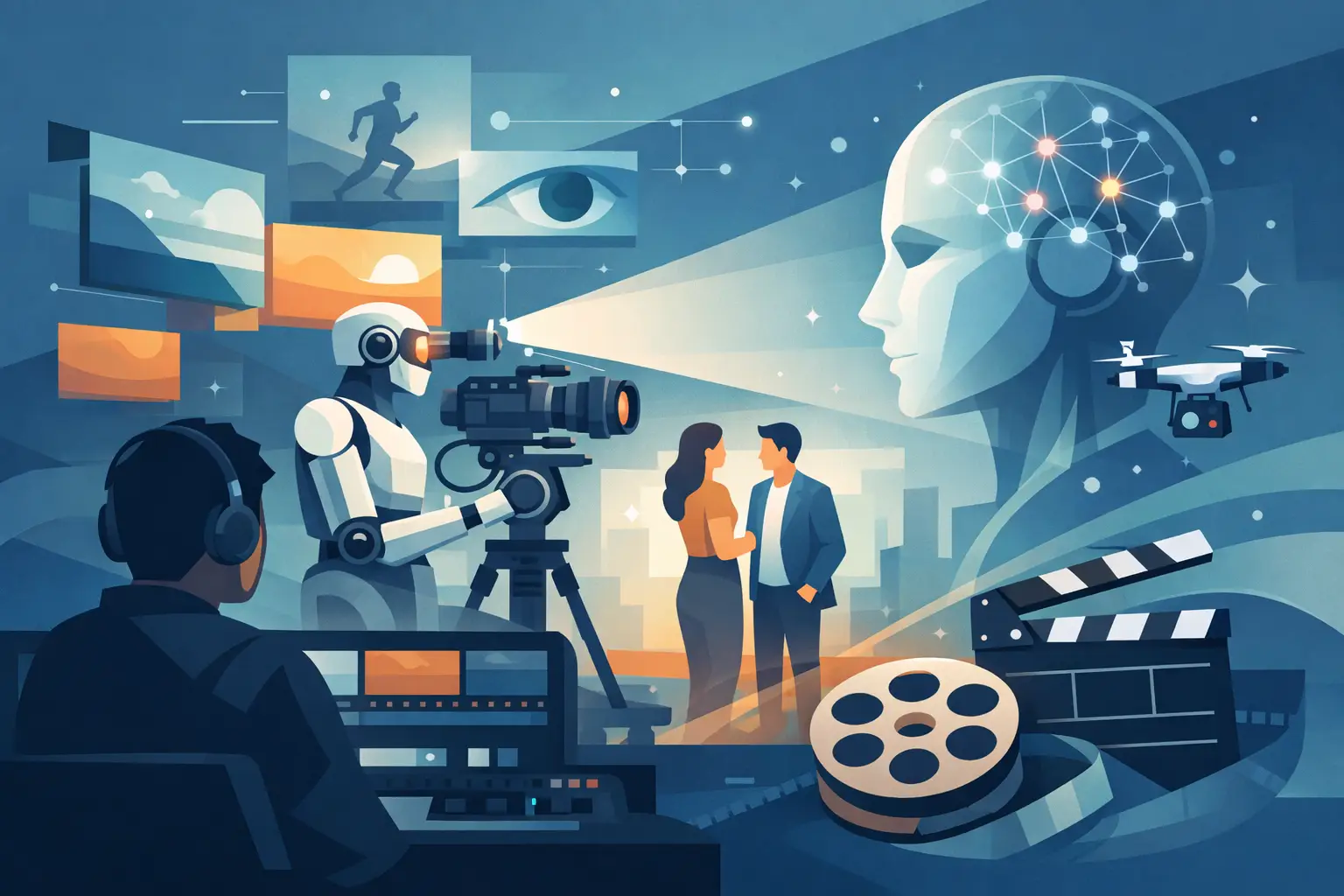
A filmmaker working with generated footage may spend less time physically arranging a set and more time defining references, testing visual prompts, selecting generations, extending shots, compositing elements, shaping voices, and rebuilding continuity in the edit. The workflow is different. The responsibility remains recognizable.
The central question is still: what should the audience feel here?
That question should arrive before a prompt. If a scene needs dread, the answer may be a low camera angle, an empty foreground, a delayed reveal, and sound that arrives a beat too late. If it needs intimacy, the image may need less spectacle, not more. A close shot that stays long enough for a tiny expression to register can do more than a succession of elaborate transformations.
This is why cinematic ai video is not a single aesthetic. It can be brutalist science fiction, fragile hand-drawn fantasy, photoreal urban noir, archival dream logic, or a form that has no stable name yet. What makes it cinema is not the look. It is the discipline behind the look.
Build a visual rulebook before generating
AI video rewards specificity, but specificity should serve a system rather than a pile of adjectives. Before generating scenes, define the world in cinematic terms: lens behavior, framing distance, movement, palette, lighting direction, texture, era, and the relationship between characters and space.
A useful rulebook might state that the camera never rises above eye level, interiors are lit by practical sources, red appears only when danger enters the frame, and the protagonist is always isolated by negative space. Those decisions make later shots feel connected, even when they are produced across different tools or sessions.
The rulebook also gives experimentation a boundary. Without one, creators can spend hours chasing singular images that refuse to become a film. With one, even a surprising generation can be judged clearly: does it belong in this world, or is it simply attractive?
Design for editability
Many generated clips arrive with their own momentum. The camera moves, the subject transforms, the environment adds drama. That can be useful, but a film cannot be built entirely from shots competing to be the trailer.
Generate coverage. Ask for establishing frames, inserts, still moments, reaction shots, transitions, and clean plates. Create shots with room at the beginning and end. Preserve moments where the subject does not change shape or direction every second. These practical choices give an editor places to cut and allow sound, performance, and rhythm to carry weight.
The distinction matters. A beautiful ten-second clip may be a complete social post. A scene needs pieces that can speak to one another.
Continuity Is a Creative Decision
Consistency is often discussed as a technical hurdle in AI filmmaking. It is that. Characters drift. Architecture mutates. A jacket changes cut between shots. A hand becomes unreliable at exactly the wrong moment.
But continuity is also artistic. Films routinely use discontinuity to create unease, memory, fantasy, or fragmentation. The difference is whether the break feels chosen.
If a character’s face shifts slightly during a grief sequence, the effect may feel haunting if the film has prepared the audience for unstable identity. In a straightforward dialogue scene, the same shift reads as a production error. Context decides the meaning.
Creators should therefore separate intentional instability from accidental instability. Lock down what the audience needs to trust: the protagonist, the central location, the action line, or the emotional premise. Let other elements drift only when that drift has a role in the film’s language.
This is where editing becomes decisive. A coherent sequence can be built from imperfect material through selective framing, motivated cuts, sound bridges, repetition, and restraint. It depends on the project. A surreal short may thrive on fractures. A narrative thriller may require far more control. There is no universal threshold for realism, only the threshold a particular story establishes.
The New Craft Is Curation
Generative production creates abundance. Abundance creates a new kind of pressure: the temptation to keep everything that looks extraordinary.
Cinema is defined as much by refusal as selection. The strongest AI filmmakers are not those who show every capability of a model. They are the ones who recognize the one image that belongs, the take that carries an unrepeatable mood, and the moment when another layer of visual invention would weaken the scene.
Curation applies to references as well. A film can borrow the visual grammar of a century of cinema in seconds. That power calls for discernment. Reference should become transformation, not imitation. The goal is not to reproduce a famous director’s signature on demand. It is to develop a new signature through choices only this creator would make.
AICINEO exists for that distinction: AI cinema as a creative territory with its own work, standards, audiences, and conversations. The medium deserves more than a feed of isolated experiments. It needs programming, criticism, and viewers prepared to meet these films as films.
Authorship Requires Clarity
AI cinema also raises questions that cannot be solved by aesthetic confidence alone. Training data, likeness, voice, labor, disclosure, and consent are active concerns. A visually ambitious piece can still be ethically careless.
Creators should be clear about what tools contributed, protect the identities and work of collaborators, and avoid treating recognizable artists or performers as raw material for style extraction. Legal standards will continue to evolve, but creative standards do not need to wait. Consent, attribution, and transparency protect the people whose work makes culture possible.
The practical trade-off is real. Faster production can mean fewer traditional production roles on a project, while new roles emerge in direction, model workflow, design systems, finishing, and creative supervision. The future worth building is not one that celebrates replacement as an aesthetic. It is one that expands who can make films while preserving respect for the artists behind them.
What Audiences Will Remember
Audiences will not remember that a scene was difficult to generate. They will remember the image that made them pause, the line that changed the meaning of a shot, the cut that arrived too soon, and the feeling that followed them after the screen went dark.
That is the opportunity in front of AI filmmakers. Make work that could not have existed before, then judge it by the oldest measure in cinema: whether it gives an audience something real to carry home.