

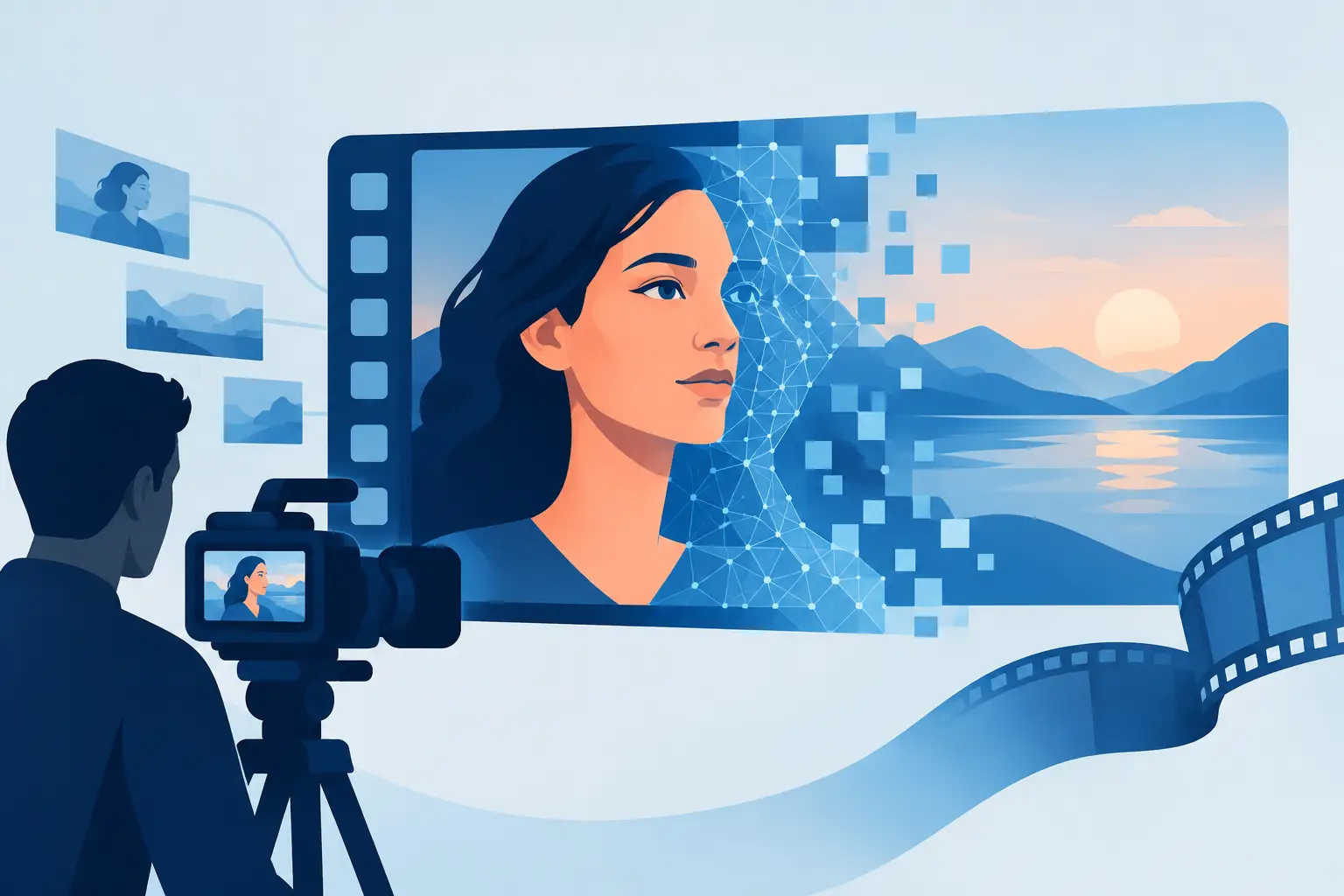
A face speaks words no actor performed. A camera moves through a city that has never existed. A voice carries the grain of memory, then shifts into something no human throat could produce. This is synthetic media - not a single tool, not a genre shortcut, but a new set of materials entering the frame.
For cinema, that distinction matters. The most interesting work is not trying to pass artificial images off as ordinary production. It is asking what becomes possible when image, motion, sound, performance, and editing can be generated, transformed, and directed through systems that do not behave like cameras or crews.
The result is not the end of filmmaking. It is a pressure test for its old assumptions.
What synthetic media actually means
Synthetic media is media created or substantially altered by computational systems, especially generative AI. It can include still images, video, dialogue, music, sound design, virtual performances, digital faces, and environments. Some work is made from a prompt. Some begins with footage, drawings, photographs, motion capture, or a recorded performance and is reshaped through AI.
The phrase is often used in discussions about deepfakes, misinformation, and automated content. Those concerns are real. But the term is broader than deception. In a cinematic context, synthetic media is a production language. It gives filmmakers access to images that may be impractical, impossible, or prohibitively expensive to capture conventionally.
That does not make every generated shot cinematic. It simply expands the raw material. Film still depends on intention: the decision to hold a frame, cut away from it, disturb the viewer, withhold an answer, or let an image breathe.
Synthetic media changes the image before the shoot
Traditional production organizes itself around capture. A script becomes a schedule. A schedule determines locations, equipment, cast, crew, weather risk, and cost. The image is designed around what can be placed in front of a lens.
Synthetic media does not erase that logic, but it changes where possibility enters. A filmmaker can develop visual worlds before a shoot exists, test an impossible production design, build a creature from a sketch, or generate dozens of tonal directions for the same scene. Preproduction becomes less about proving feasibility and more about defining a visual system.
This is especially significant for independent filmmakers. A small team can now explore scale without pretending to have a studio budget. A story set across a flooded future metropolis, a dream architecture, or a lost historical landscape can be developed as cinema rather than abandoned as an expensive pitch deck.
There is a trade-off. Infinite variation can weaken judgment. When every image can be regenerated, the temptation is to keep searching instead of choosing. The director's eye becomes more valuable, not less. Someone still has to recognize the shot that belongs in the film.
The new craft is direction, not automation
The lazy description of AI filmmaking is that the machine makes the movie. It misses the work entirely.
In serious practice, synthetic media introduces a different kind of direction. The creator establishes references, mood, composition, movement, pacing, continuity, and constraints. They may combine generated images with live-action footage, animate a performance, redesign a frame in post, or use an AI voice as a deliberate narrative device. The process is iterative, but iteration is not authorship by itself. Taste is.
A generated image can be visually striking and still feel empty. It may contain detail without meaning, atmosphere without a point of view. Cinema begins when the image serves a larger structure - a character's fracture, a world with rules, a tension between what is seen and what is true.
That is why the strongest AI films often feel less like demonstrations and more like decisions. Their tools may be new, but their ambitions are familiar: create a mood that lingers; make an audience see a known emotion from an unfamiliar angle; construct an experience that could not exist in another medium.
Performance is being redefined, not removed
Performance is one of the most contested areas of synthetic media. A generated face or cloned voice raises immediate questions about consent, credit, compensation, and identity. Those questions deserve direct answers, not vague promises of innovation.
Ethical use begins with permission. If a person's likeness, voice, or performance data is used, the terms should be explicit. If a character is synthetic, audiences should not be manipulated into believing a real person said or did something they did not. Context matters. Documentary, satire, fiction, advertising, and political media carry different expectations and different risks.
At the same time, synthetic performance can be an expressive form in its own right. A voice that shifts between ages, a figure that cannot hold a stable identity, or an animated body that moves beyond physical anatomy may be central to a film's idea. The creative question is not whether a performance is artificial. Cinema has always used artifice. The question is whether the artifice is honest about itself and meaningful in the work.
Why provenance will become part of film culture
As synthetic media becomes ordinary, audiences will want more than a polished image. They will want to know how an image came into being.
Provenance is not a bureaucratic detail. It is part of trust. Clear disclosure can distinguish a fictional synthetic character from an unauthorized likeness, an AI-assisted restoration from fabricated archival footage, or a stylized generated scene from a claim about reality. The more believable the media becomes, the more valuable this clarity becomes.
For creators, provenance can also become part of the story of the work. Credits may evolve to reflect model use, data sources where relevant, human collaborators, performers, designers, and post-production processes. That will not require every film to explain its pipeline at length. It does mean the industry needs language for attribution that matches the complexity of the medium.
Transparency does not diminish the magic. In many cases, it deepens appreciation. Knowing how a film was constructed can reveal the precision behind an effect, the collaboration behind a synthetic character, or the conceptual reason a filmmaker chose an artificial image over a photographed one.
The risk is sameness
The first wave of any visual technology has a look. Early digital cinema had one. Early CGI had one. So does generative media: luminous faces, unstable hands, hyper-detailed surfaces, dreamlike transitions, a tendency toward spectacle without geography.
That look is not a movement. It is a default.
The challenge for filmmakers is to move beyond it. A distinctive AI cinema practice may use restraint instead of excess. It may embrace artifacts rather than hide them. It may use synthetic media for a single impossible shot inside an otherwise grounded film. Or it may build an entire world whose visual instability is the point.
What matters is that the form answers to the film, not the other way around. If every project reaches for the same polished unreality, synthetic media will become visually interchangeable. If creators develop personal grammar, regional sensibilities, new editing rhythms, and unconventional relationships between sound and image, the medium can become culturally expansive.
A new cinema needs a real audience
Tools alone do not create a film culture. Culture needs viewers who can recognize the difference between a test clip and a finished work, between novelty and intention, between a technical achievement and a lasting image.
That is the opportunity for AI cinema. It needs places where work can be presented as film, discussed as film, and judged with standards that go beyond prompt complexity. AICINEO exists within that emerging territory: a dedicated frame for creators and audiences who take this medium seriously.
Synthetic media will continue to enter the industry through commercials, music videos, visual effects, social feeds, games, and feature production. But its most lasting impact may come from artists who use it to make work no established pipeline would have encouraged. The question is no longer whether these images belong on screen. The more interesting question is what kind of cinema they make possible when someone gives them a reason to exist.