

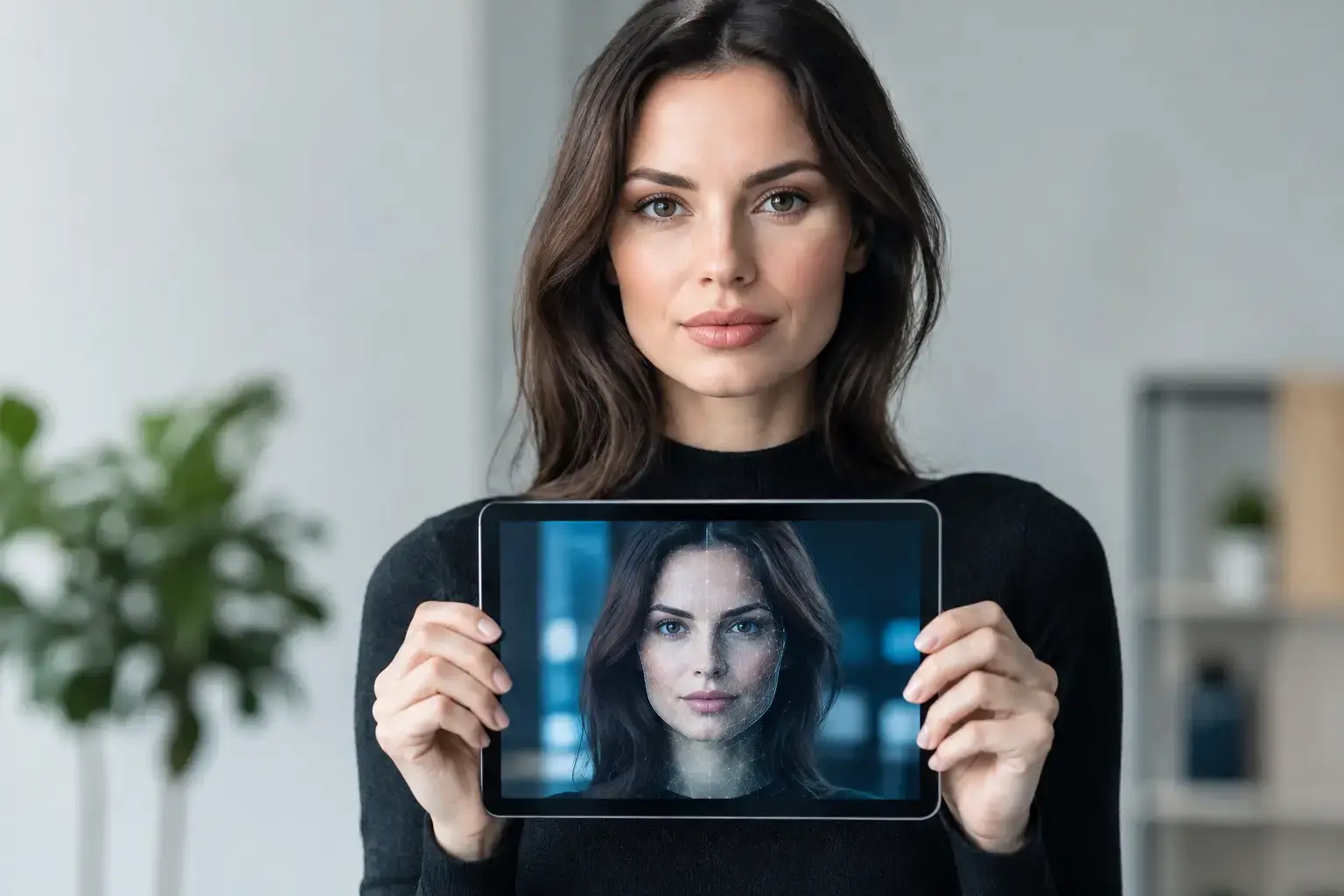
> Featured image direction: Photorealistic cinematic close-up of a performer standing before a motion-capture volume, with a luminous digital double reflected in a studio monitor. Soft practical lighting, shallow depth of field, premium sci-fi drama mood, 16:9.
A convincing AI performer can now appear in a short film without a camera crew, a travel budget, or a day on set. That creative freedom is exciting. But AI actor ownership decides who can approve, reuse, monetize, or remove that performance after the export is complete. For filmmakers, creators, and performers, this is not paperwork to handle later. It is part of directing responsibly from the first frame.
An AI actor might be a fully synthetic character, a licensed digital replica of a real person, or a voice-and-likeness performance created from reference material. Those categories can look similar on screen. Their rights are very different.
What AI actor ownership actually means
AI actor ownership is the set of rights around a digital performance: the face, body, voice, movement, style, and the generated footage built from them. It answers practical questions every production needs to settle: Who gave permission? What uses are allowed? How long does that permission last? Can the asset appear in advertising, sequels, social clips, or another creator’s project?
The word “ownership” can be misleading because one digital character may involve several separate rights. A performer may control their name, image, voice, and approval rights. A production may own the final edit, the script, the character design, and its distribution rights. A tool provider may have terms governing the platform, model outputs, or uploaded materials.
That means a creator should not assume that paying for a generated clip grants unrestricted rights to every element in it. The safest production workflow is simple: identify what is original, what is licensed, and what was supplied by another person before you publish.
Three kinds of AI actors, three different risks
Fully original digital characters
A character designed from scratch is usually the cleanest route for independent productions. You define the look, performance direction, wardrobe, voice approach, and backstory without relying on a recognizable real person.
Original does not mean careless. Avoid prompts that call for an exact living actor’s face, signature voice, or highly recognizable persona. “A weathered space captain with silver hair” is a creative brief. “Make this look exactly like a famous actor” creates a very different legal and ethical problem.
For a short film, music video, or branded social campaign, original characters also give you more room to build a repeatable cast. Keep a character bible with visual references, prompt language, costume notes, and usage records. It helps maintain continuity when the character returns in a sequel or series.
Licensed digital doubles
A licensed digital double is based on a real performer who has agreed to the use. This can be powerful for creators who want to collaborate across distance, produce pickups after a shoot, or create stylized versions of an actor’s performance.
The agreement should be specific. A broad statement such as “you can use my likeness” leaves too much open. Define the project, media channels, territories, term length, whether the work can be edited with AI, whether voice replication is included, and whether the digital double can be reused in future productions.
Payment matters too. A performer may agree to a flat project fee, a recurring license, revenue participation, or a limited test use. The right deal depends on the production’s scale and the performer’s involvement. What matters is that both sides can understand it before the asset is generated.
Stock, template, or platform-generated performers
Some AI creation tools offer avatars, characters, and voices built for broad commercial use. These can be efficient when you need a presenter, background character, or fast visual concept. Still, read the usage terms for the specific asset and plan you use.
Check whether commercial use is included, whether distribution on paid platforms is permitted, and whether the character is exclusive to your project. A non-exclusive avatar can be perfect for a tutorial video. It may be less useful if you are trying to build a distinctive lead character for a serialized film universe.
Build consent into the creative workflow
The best time to discuss rights is before you generate a face swap, voice model, or realistic scene. Once a clip has gone viral, the cost of undoing a bad decision is much higher than the cost of getting written permission.
For productions involving real people, create a short digital-likeness release. It should state the performer’s legal name, the materials they provide, the project name, the permitted uses, the length of the license, compensation, and any approval or removal rights. Include a clear statement on whether the production can use AI to alter appearance, age, language, dialogue, movement, or voice.
Consent should be informed, not buried. Show performers an example of the intended result when possible. A person might be comfortable appearing in a 30-second festival teaser but not in political advertising, adult content, endorsements, or an open-ended training dataset. Those boundaries deserve to be written down.
If the subject is a minor, obtain consent from the appropriate parent or legal guardian and take extra care with where and how the material is stored. If you are creating a project for a client, do not assume the client’s verbal approval replaces releases from the people appearing on screen.
A practical rights checklist before you publish
Before releasing an AI-driven scene, confirm four things. First, your script, music, visuals, and character references are original, licensed, or permitted for the intended use. Second, every recognizable real person has given written permission for the exact type of AI treatment involved. Third, your distribution plan matches the terms of the tools and assets used. Fourth, your project files include a record of releases, licenses, generation dates, and final exports.
This does not need to slow down a fast creative process. It can be a folder inside your project with a clear naming system: `Character_Name_Release`, `Voice_License`, `Music_Rights`, and `Final_Usage_Notes`. If a distributor, client, collaborator, or performer has a question later, you can answer with confidence instead of reconstructing the project from memory.
Creative control is part of ownership
Legal permission is only one side of the issue. Filmmakers also need control over how a digital performance is shaped. A useful AI actor should serve the story, not become a visual shortcut that pulls attention away from it.
Direct the performance as you would any actor. Give the character a motivation, a playable action, a defined emotional shift, and a reason to enter the frame. Rather than asking for “sad,” try a specific cinematic direction: “She hides her panic while reading a message that changes everything.” That creates a performance with behavior, not just an expression.
Use test shots before building a full sequence. Check whether the character’s face stays consistent across close-ups, whether the voice matches the emotional temperature, and whether the lighting supports the scene. If the character will appear repeatedly, save the strongest references and keep your prompts consistent.
AICINEO gives creators one place to move from screenplay to cinematic video, original score, edit, and release - so the ownership record can stay connected to the production instead of scattered across separate tools. Try it free and build your next scene with a clear creative plan.
When to choose a human performance instead
AI actors are not the answer to every creative challenge. A live performer may be the better choice when the project depends on improvisation, a deeply personal lived experience, a public-facing celebrity endorsement, or a nuanced scene that needs real-time collaboration on set.
The strongest productions often use a hybrid approach. Film a human lead, generate an original AI supporting character, extend an environment digitally, and create a custom score that carries the emotional arc. The technology should widen the range of stories you can make, not erase the human choices that make a film feel alive.
The standard worth setting now
Audiences can accept new production methods when the work is honest about its intent and respectful of the people behind it. Creators who treat consent, credit, and creative boundaries as part of the craft will be better positioned to build lasting characters and lasting trust.
Make the character original when you can. License the likeness when you need it. Keep the permission clear. Then put your energy where it belongs: on the scene, the sound, the cut, and the story only you can tell.